Build ten overlapping evergreen bundles on a 14-inch wire frame, balance the finished shape, then wire on pinecones and a structured velvet bow.
Classic Evergreen Wreath with a Velvet Ribbon
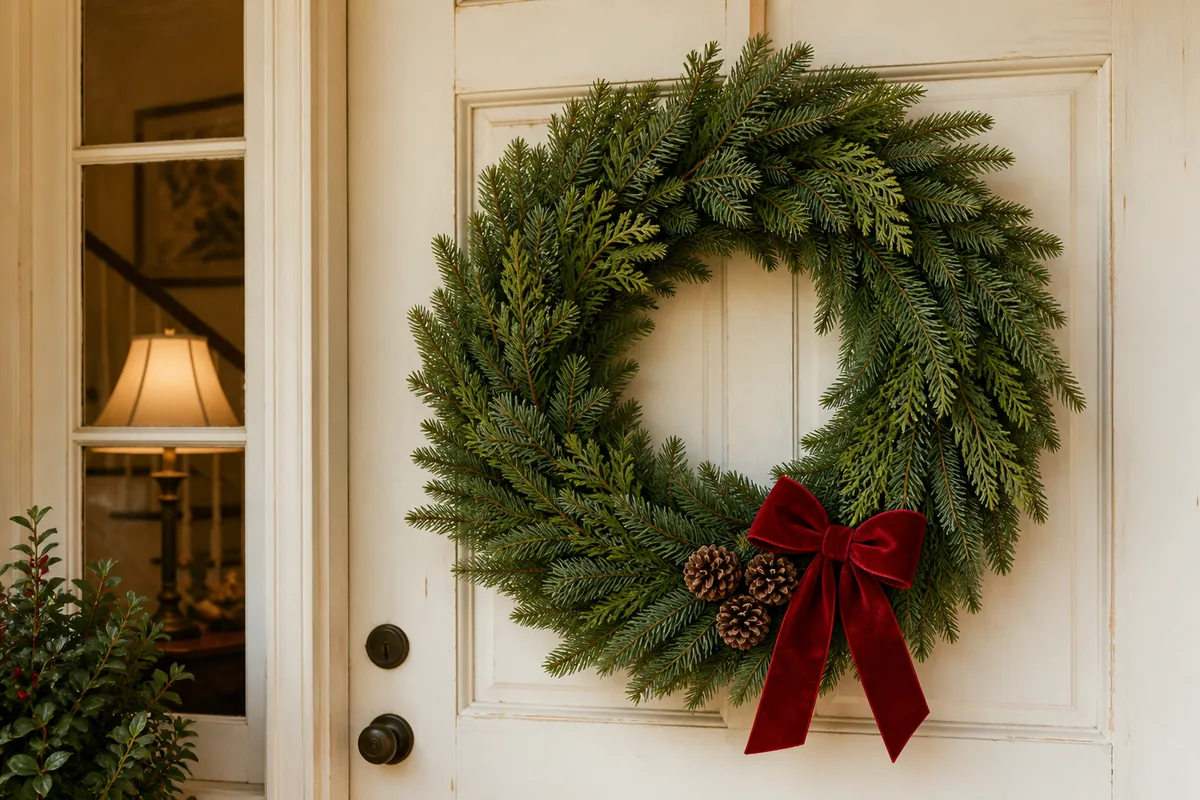
A full, traditional wreath does not require a florist’s studio. The key is to attach small, overlapping bundles rather than wrestling individual branches onto the frame. This method uses a 14-inch wire form and enough mixed greenery to finish at approximately 22 inches wide—a useful size for a standard front door without covering the handle or peephole. A deep red velvet bow supplies the color, while pinecones keep the arrangement natural and restrained.
Project at a glance
- Difficulty: Intermediate
- Active time: 60–75 minutes
- Total time: 60–75 minutes
- Yield: One wreath, approximately 22 inches wide
- Supervision: Adults; gloves recommended
Materials and tools
For one wreath, gather a 14-inch four-ring wire wreath frame; approximately 30 evergreen tips, each 8–12 inches long; 22-gauge green paddle wire; three small pinecones; and 2 yards of 2½-inch wired velvet ribbon. A mix of fir, cedar, pine, or juniper gives better texture than a single variety. You will also need bypass pruners, wire cutters, work gloves, and a ruler. Add one 12-inch length of sturdy cord if the door hook does not fit through the frame.
Fresh branches should be flexible, richly colored, and free of dry brown needles. Shake them outdoors and inspect for insects before bringing them to the worktable. If fresh greenery is unavailable, use realistic artificial stems in the same quantities; cut them into tips with wire cutters rather than pruners.
Prepare the greenery bundles
Cover the table and put on gloves, because fir resin can be sticky and some conifers have sharp needles. Trim each tip to a usable 8–12-inch length and remove needles from the bottom 2 inches of the stem. Sort the pieces into large, medium, and fine-textured piles.
Make ten loose bundles. Each should contain one sturdy 10–12-inch branch at the back, one medium branch angled slightly to the side, and one shorter cedar or juniper tip at the front. Aim for bundles 6–8 inches across. They do not need to match exactly, but their overall weight should be similar so the wreath grows evenly.
Wire the bundles to the frame
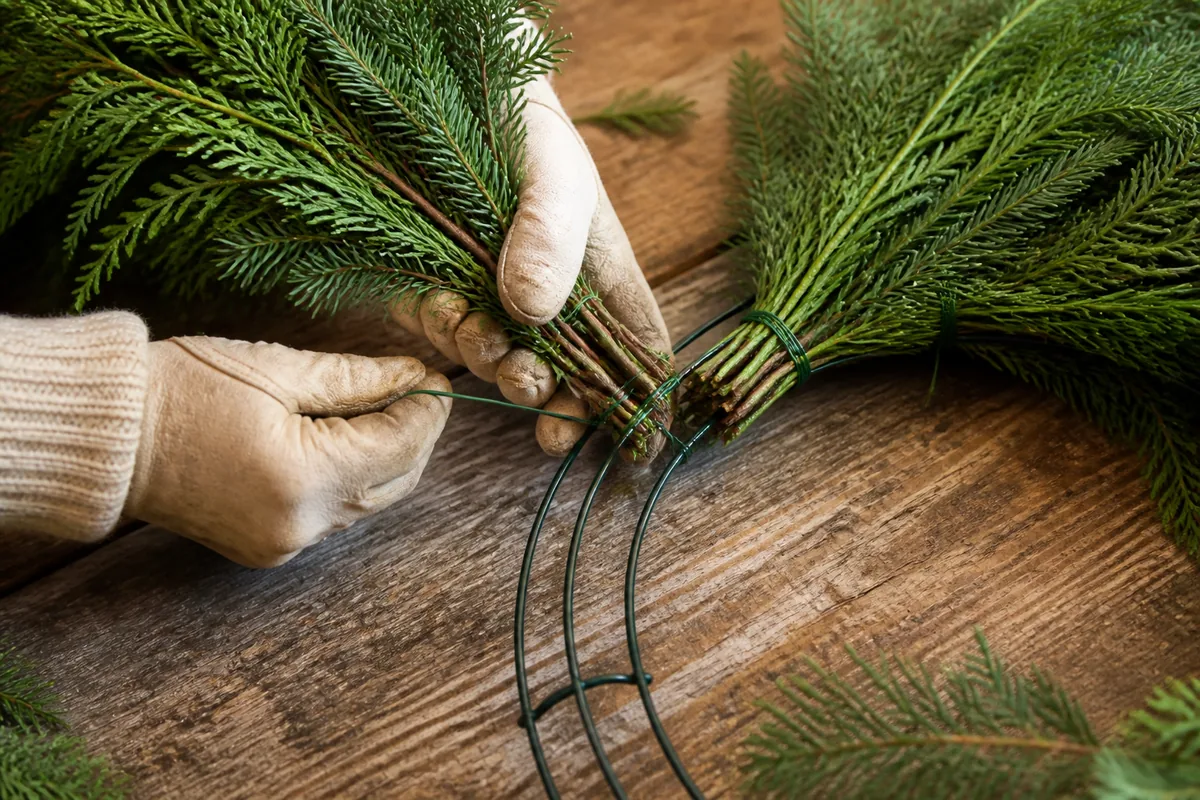
Place the frame faceup. Secure the free end of the paddle wire to the outer ring with three tight wraps; leave the wire attached to its spool. Lay the first bundle at roughly the 7 o’clock position, stems following the circle clockwise. Wrap the wire around the stems and frame three times, pulling firmly after every turn. The bundle should not rotate when gently tugged.
Position the next bundle 3–4 inches clockwise, covering the first bundle’s bare stems. Angle it slightly outward so greenery reaches both the inner and outer edges. Bind it with three more wraps without cutting the wire. Continue around the frame, alternating the direction of fine-textured tips to avoid a rigid, combed appearance.
Before fastening the final bundle, lift the foliage of the first one and slide the last stems beneath it. Wire them securely, then wrap the paddle wire around the frame twice. Cut it with a 4-inch tail, pull that tail through the frame, and twist it back on itself. Turn the wreath over and bend all sharp wire ends inward.
Balance the shape and add pinecones
Hang the undecorated wreath at eye level and step back 6 feet. A low spot is easier to see vertically than on the table. Tuck in spare tips by wiring their stems directly to the frame; do not rely on hot glue outdoors, where temperature changes and moisture can loosen it.
Cut three 12-inch pieces of paddle wire. Wrap one around the base of each pinecone, hiding the wire between the scales, and twist the two ends together. Cluster the cones slightly below center at about 5 o’clock, leaving room for the bow. Feed the wire ends through the greenery, fasten them to the frame, and trim and tuck the excess.
Tie and attach the velvet bow
Cut a 16-inch ribbon length for two tails and notch each end with an inverted V. From the remaining ribbon, form two 6-inch loops with a 4-inch center loop, pinching the ribbon tightly between each loop. Wired ribbon holds the shape and is much easier to adjust than soft dressmaking velvet.
Secure the bow’s center with an 18-inch piece of paddle wire. Place the tail strip behind it, wrap with the same wire, and twist firmly. Attach the bow over the pinecone cluster, wiring it to the metal frame rather than to a branch. Shape the loops with your fingers and angle the tails downward so they remain visible against the greenery.
Hang and care for the wreath
Test the wreath outdoors in a sheltered location before closing the door. Make sure it cannot strike glass, interfere with the latch, or shed wire ends at hand level. Keep fresh greenery away from open flames, hot exterior lights, and heaters. Mist the back lightly every few days in a cool climate, but avoid soaking velvet ribbon or a wooden door.
A fresh wreath typically looks best for two to four weeks outdoors, depending on temperature and exposure. At season’s end, remove the ribbon, cones, and wire. Compost untreated greenery where local rules allow, dry the velvet before storing, and keep the reusable frame ready for next Christmas.