Choose one repeatable activity, document whose tradition it represents, invite participants to contribute their own stories, and preserve a dated object or record each year.
Family and School Christmas Craft Traditions
A tradition becomes meaningful through repetition, memory, and participation—not because it looks old. Families and schools can build durable projects by choosing one form, recording who contributed, and allowing the practice to change. In a classroom, that also means distinguishing a family’s custom from a universal claim and providing an equally valued option for students who do not celebrate Christmas.
Start with evidence close to home
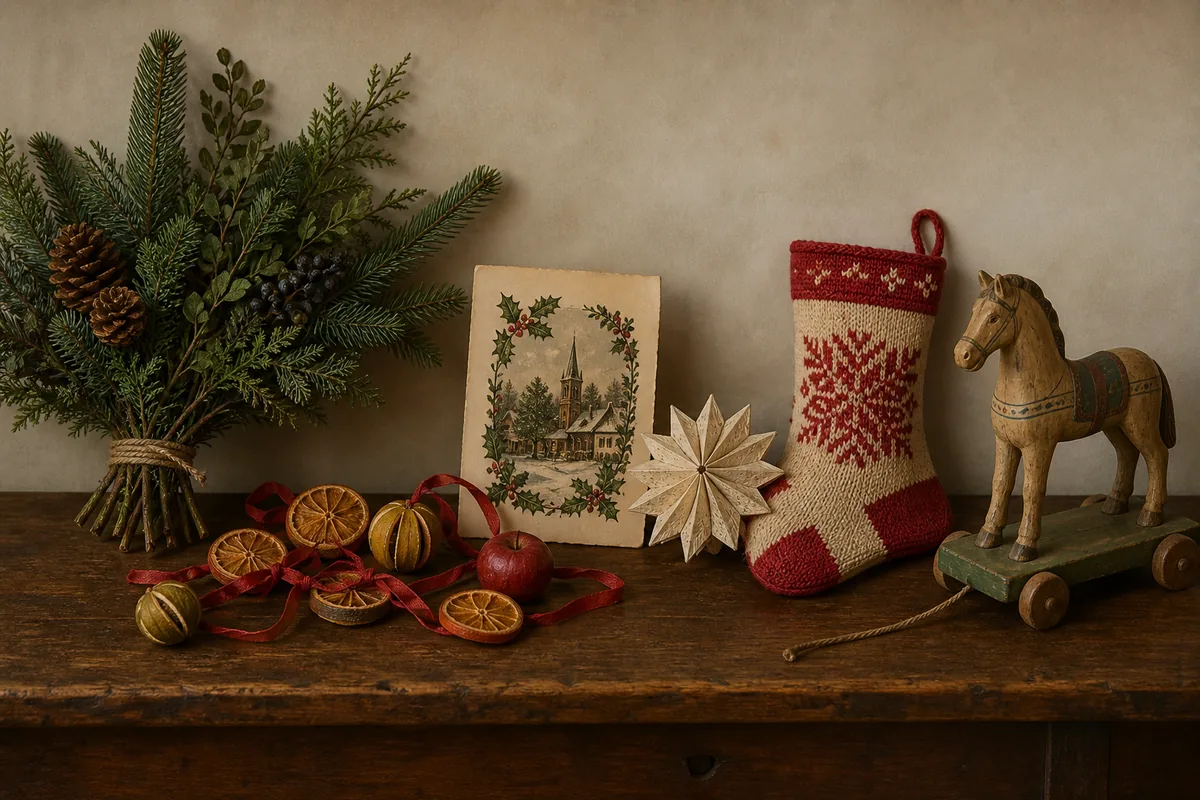
Before choosing a craft, ask what the group already remembers. A family can place three objects or photographs on a table and record who made them, when they appeared, how they were used, and what remains uncertain. Do not fill gaps with a picturesque story. “We think this ornament belonged to a great-grandparent” is more trustworthy than an invented date or origin.
The Library of Congress recommends intergenerational interviews as a way for students to explore cultural rituals and compare past and present customs. Adapt that method with five questions: What did you make or decorate? Who worked with you? Which materials were available? Where was the finished object used? What changed over time? Ask permission before recording, sharing names, or reproducing photographs.
A school should not require children to disclose religion, family structure, immigration history, or finances. Students can interview a willing relative, neighbor, community member, or staff member; analyze an approved historical source; or describe a seasonal routine without personal details.
Tradition one: the dated keepsake ornament
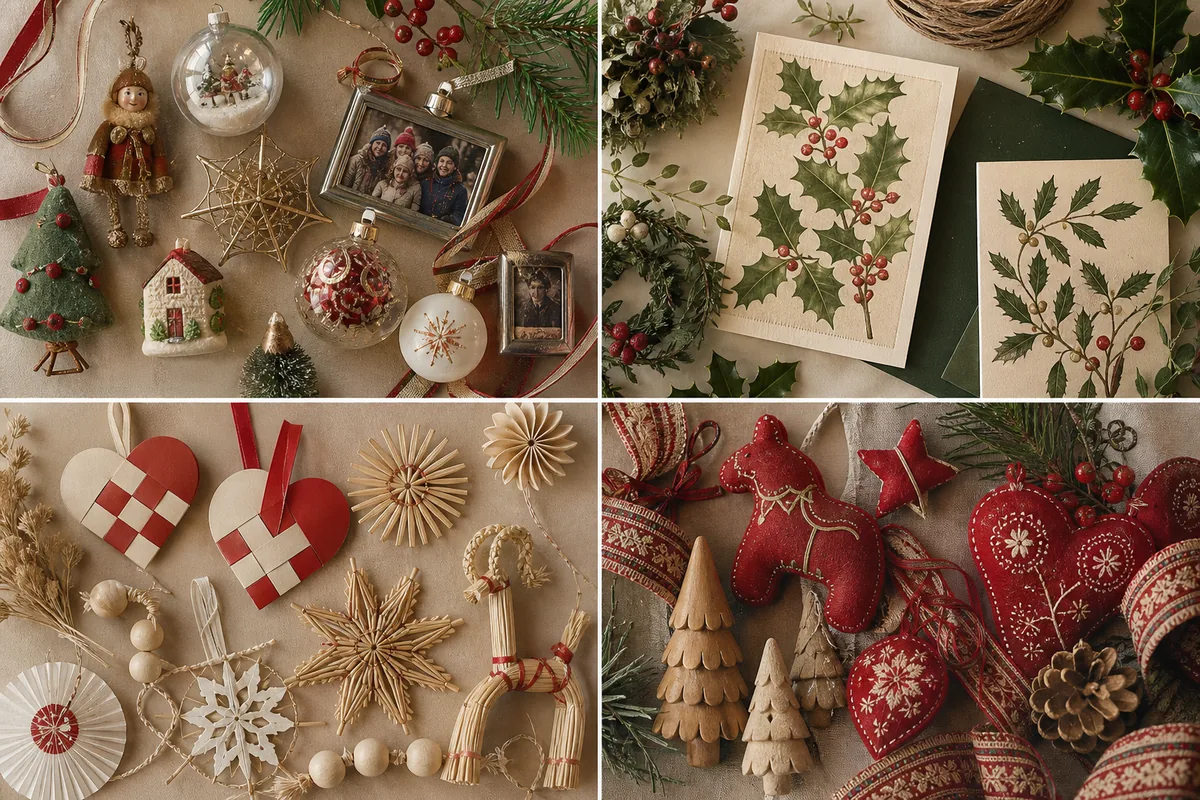
An annual ornament gives a family one small object to complete and store. Standardize the size—about 3 to 4 inches—and change the material or motif each year. Add the year and maker’s first name or initials on an archival paper tag rather than writing across a fragile inherited piece.
For a group version, provide pre-cut cardstock or felt bases, washable markers, blunt needles where age-appropriate, and 8-inch ribbon loops. Adults should handle craft knives, hot glue, wire, and oven curing. Avoid glitter, food allergens, and tiny detachable parts when they create accessibility or safety problems.
Store each ornament in acid-free tissue inside a labeled compartment. Include a brief note about the project prompt. After five years, the record will show changes in handwriting, color, skill, and family membership without requiring every ornament to match.
Tradition two: a shared paper garland
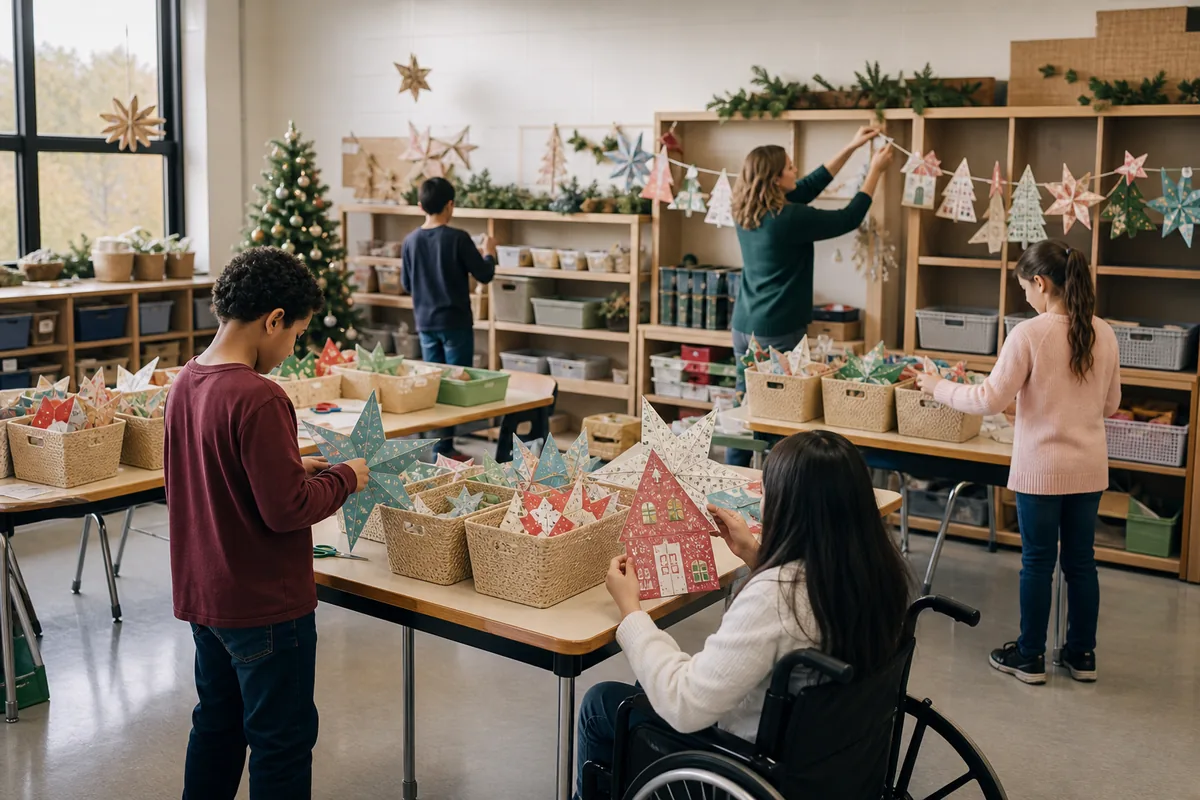
A garland is useful for schools because every participant contributes one unit while the final display belongs to the group. Choose a neutral structure such as 4-inch folded stars, paper houses, or linked message cards. A class of 24 can make one unit each and assemble a 10- to 12-foot garland with safe gaps.
Ask students to decorate around an approved theme—winter light, kindness, community places, favorite books, or Christmas imagery where appropriate. Offer image-based, written, and undecorated color options. No child’s work should be marked as the non-Christmas alternative or placed separately.
Punch and string pieces only after all are dry. Mount the garland away from exits, heaters, sprinklers, and ceiling fixtures, following school fire rules. Do not suspend it where students can pull it or where a fallen cord could cross a path. Photograph the complete display according to school privacy policy, then return individual units or archive a small sample with consent.
Tradition three: a making-and-story evening
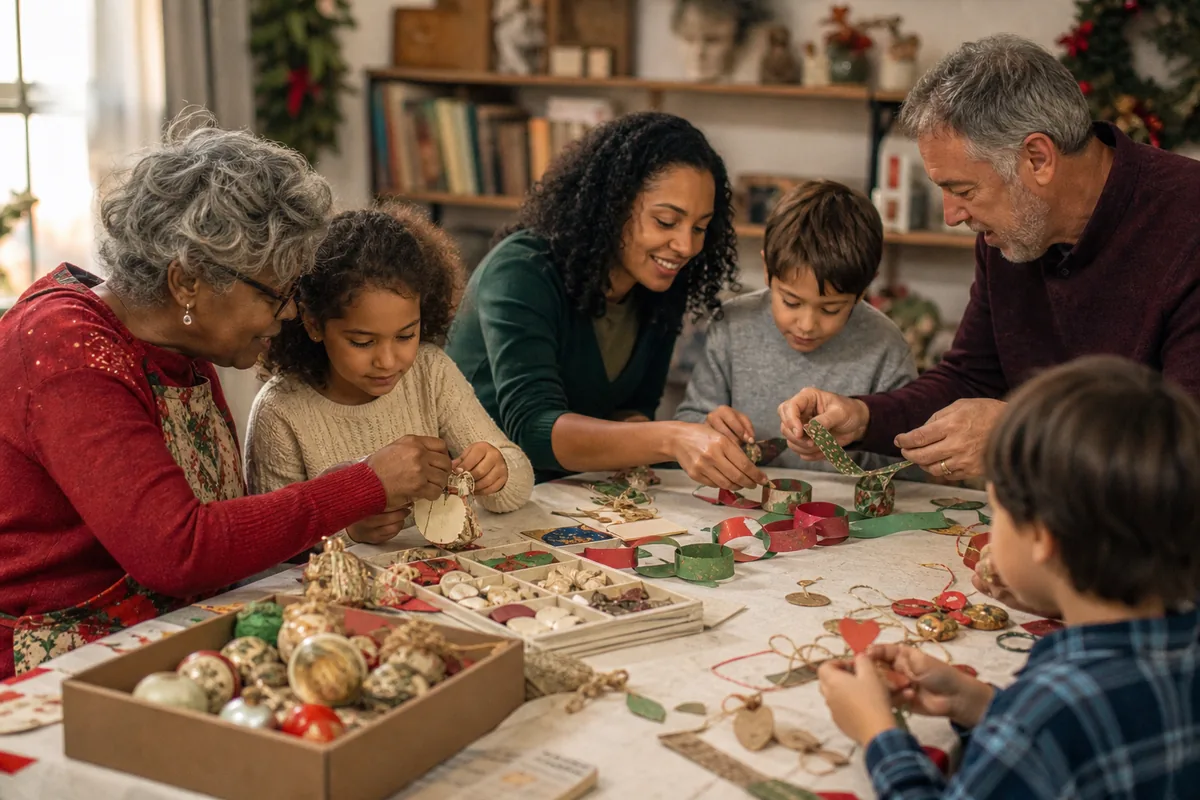
A 90-minute family or community session works best with one main craft and one conversation prompt. Set up four zones: materials, making, drying, and documentation. Prepare one sample but invite variation. A facilitator can share a verified short history of the object, then ask participants whether their families made, bought, displayed, or avoided similar items.
Plan quantities at 10 percent above confirmed attendance. For a 20-person paper-star evening, prepare 110 squares if each person needs five, plus 10 spare squares. Put tools at each table rather than creating a crowded central queue. Clearly label adhesives and materials; request allergy and access information in advance.
Do not market a newly designed activity as an “ancient tradition.” Call it a new annual gathering inspired by a documented technique. If a community member teaches a culturally specific practice, agree in advance on credit, payment, photography, and whether the method may be copied afterward.
Keep classroom practice inclusive and accurate
Christmas can be taught as religious observance, cultural history, literature, art, or community practice depending on the school and curriculum. The project’s purpose should be explicit. A comparative lesson may examine dated cards, family photographs, advertisements, or oral histories and ask how materials and messages changed. A devotional activity belongs only where policy and community context permit it.
Avoid a quick “crafts around the world” format that assigns one simplified object to an entire country. It can turn living traditions into stereotypes and often relies on unsourced internet summaries. Study fewer examples with better evidence. Let students distinguish a museum object, a family account, a commercial style, and their own modern interpretation.
Document change instead of freezing the ritual
After each project, save the template, one finished example where permission allows, a materials list, the date, and two or three sentences about what changed. Note substitutions and safety improvements. Store digital photographs with descriptive filenames and consent information, not only in a social-media feed.
Review the tradition before repeating it. Does every participant have a meaningful role? Are the cost, time, storage, and cleanup still reasonable? Has community membership changed? A tradition can keep its central action—making one ornament, linking one garland, sharing one story—while changing language, material, or display.
The strongest family and school projects do not manufacture nostalgia. They create a reliable setting in which people can make something, explain what it means to them, and leave an honest record for the next year.