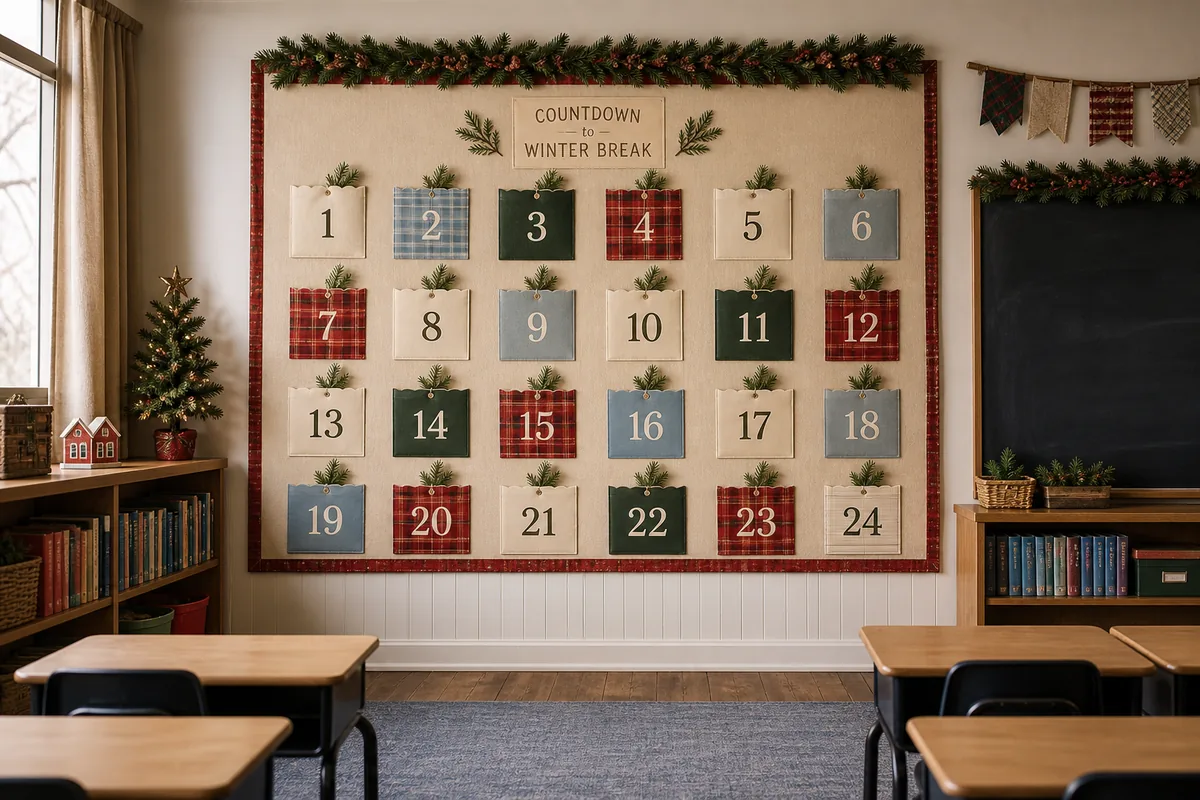
Mount 24 lightweight numbered pockets in a six-by-four grid, place one 10–15-minute activity card in each, and manage supplies in dated classroom bins.
Classroom Advent Craft Board Ideas
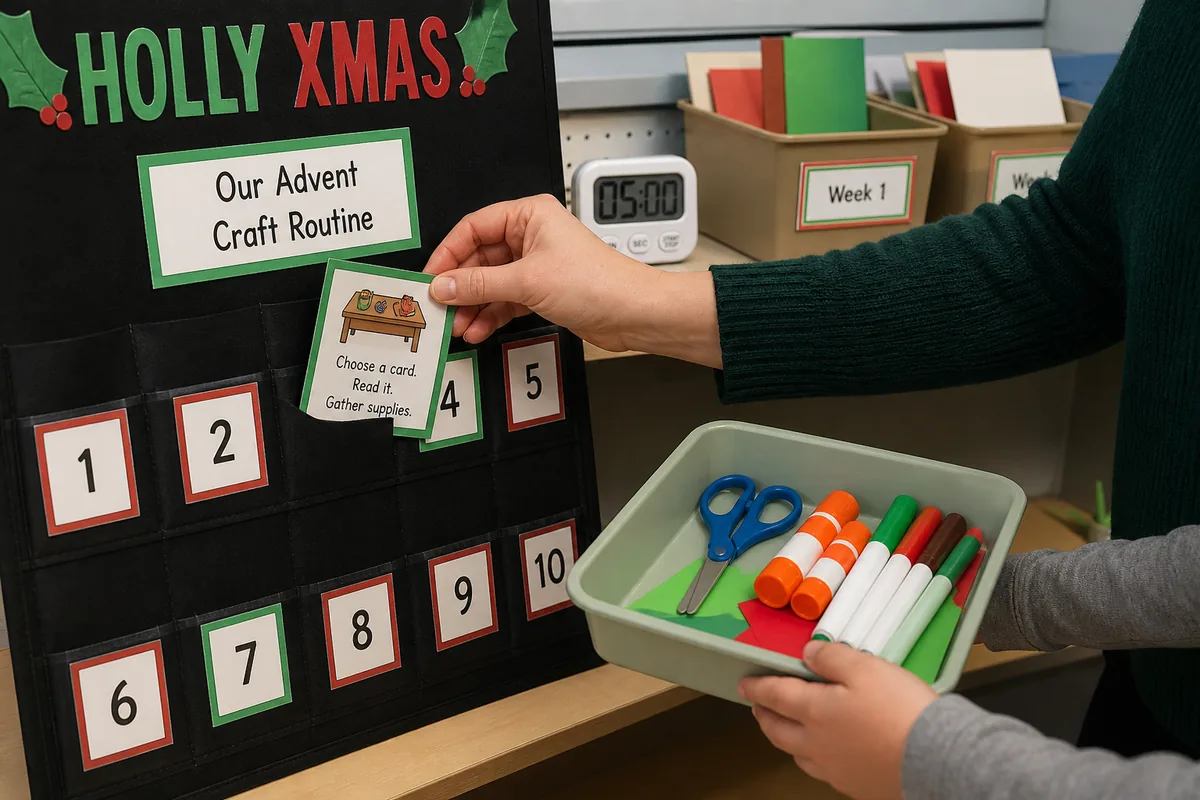
A classroom Advent board works best as a predictable daily routine rather than a wall of 24 unrelated projects. This version uses a 48-by-36-inch bulletin board with lightweight numbered pockets arranged in a six-column, four-row grid. Each pocket holds one instruction card for a 10–15-minute activity; bulk materials stay in teacher-controlled bins so the display remains tidy and safe.
Decide what the board should count down to
Before making pockets, confirm the school’s calendar, holiday policy, and classroom goals. A Christian school may count toward Christmas using explicitly Advent language. A public or multifaith classroom may need a neutral “December Kindness and Making Countdown” instead. The structure remains the same, but the wording and activities should reflect the students and approved curriculum.
Count the actual instructional days rather than assuming all 24 pockets will be opened in class. Weekend cards can suggest optional home activities, or several dates can be opened together on Monday. Mark non-school days with a distinct star icon so children understand the rhythm.
Make 24 reusable pockets
Cut 24 pieces of 65–80 lb cardstock to 6 by 8 inches. Fold the bottom 2½ inches upward and glue or staple the side edges to form a pocket approximately 6 by 2½ inches. If stapling, place staple legs against the board and cover them with paper tape. Number the pockets with 2-inch digits that can be read from the back of the room.
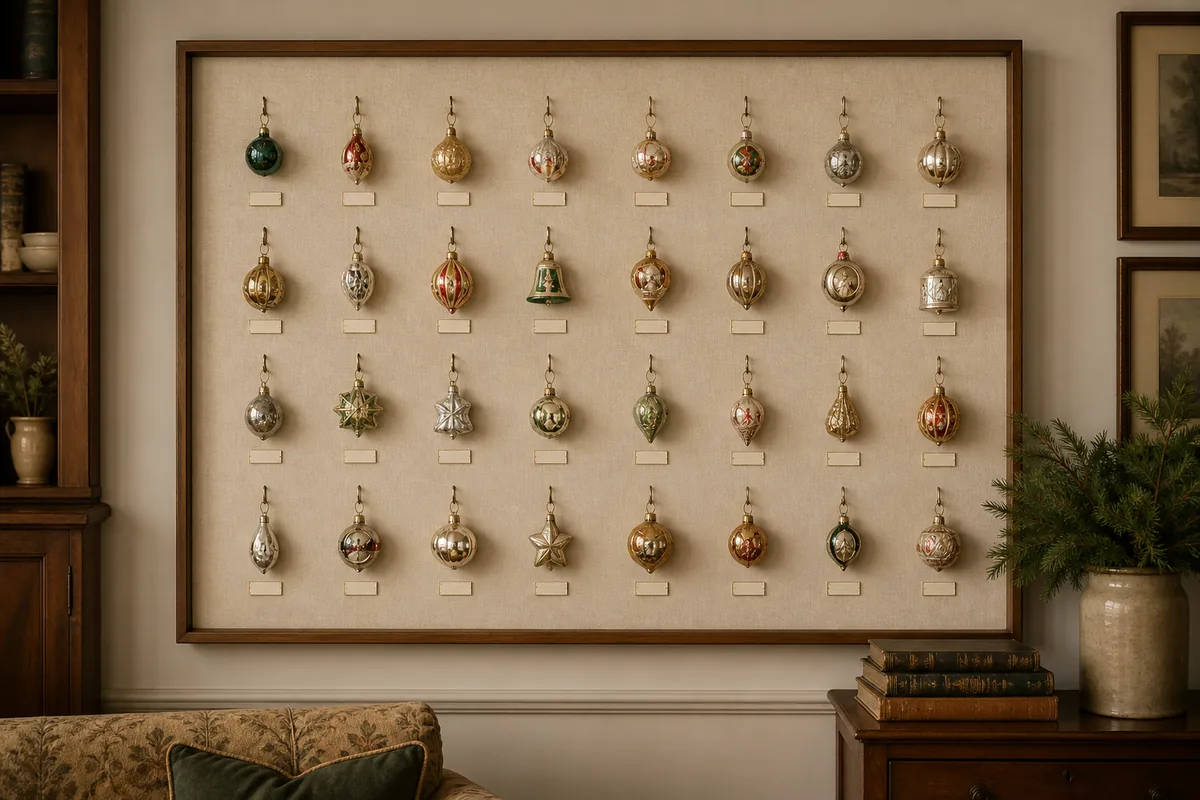
Lay the pockets on the floor in a six-by-four grid before mounting. Allow roughly 1 inch between pockets and 2 inches around the board edge. Arrange numbers sequentially for younger children or scatter them for a daily search with older students. Keep the lowest row at least 30 inches above the floor if children should not open pockets without supervision.
Use staples on a fabric-covered bulletin board, removable mounting strips rated for painted surfaces, or hook-and-loop dots on a laminated backing. Never rely on pushpins within children’s reach. Test one pocket with an instruction card inside before mounting the rest.
Write activities that fit the school day
Each card should name one action, list the required materials, and state the time limit. Useful examples include folding one paper star, adding a link to a class kindness chain, drawing a winter window, writing a thank-you note, decorating a shared paper tree, or listening to a short seasonal story while coloring.
Avoid placing loose supplies in the wall pockets. Glitter, tiny bells, food, sharp tools, and liquid glue can spill or create allergy and choking concerns. Instead, label five lidded bins by week and prepare one small tray for the day’s materials. Use glue sticks, blunt scissors, washable markers, and precut shapes when time is limited.
Choose activities with several valid outcomes. A child with limited fine-motor control might place large paper shapes instead of cutting; a student who does not celebrate Christmas can contribute a winter motif, kind message, or classroom helper task. Participation should never require a religious statement or personal holiday disclosure.
Establish a daily opening routine
Assign one student to remove the activity card while another brings the correct supply tray. Read the directions aloud, show a finished example only when sequencing matters, and set a visible timer. Ten focused minutes is more sustainable than allowing the activity to absorb an entire lesson.
Create one drying or collection location. A wire line hung by an adult above reach, a labeled flat tray, or a class scrapbook prevents small crafts from covering desks. If the daily item contributes to a shared display, mark its intended position before students begin.
At cleanup, return reusable tools to the tray, recycle scraps, and place the instruction card behind its pocket. That simple step creates a complete record for next year.
Keep the board secure and calm
The board must not obstruct exits, safety signs, heating units, windows, or interactive displays. Use only flame-resistant classroom materials where required by local policy, and keep paper well away from outlets and hot lights. Inspect the mounting weekly and remove any torn pocket with exposed staples.
Visually, limit the palette to warm ivory, dusty blue, evergreen, and muted red. One border and a small heading are enough; the numbered grid supplies the pattern. At the end of the term, stack the pockets by number, store the activity cards and teacher notes inside them, and record which activities actually fit the allotted time. The next classroom Advent board will then begin with tested routines rather than another month of preparation.
Prepare a backup card for days when attendance, assemblies, or weather disrupt the plan. A five-minute drawing prompt, shared read-aloud, or class compliment requires no special supply tray and prevents the countdown from becoming another source of schedule pressure. Note substitutions on the original activity card. That record helps a future teacher distinguish a weak idea from a good activity that simply appeared on the wrong day.