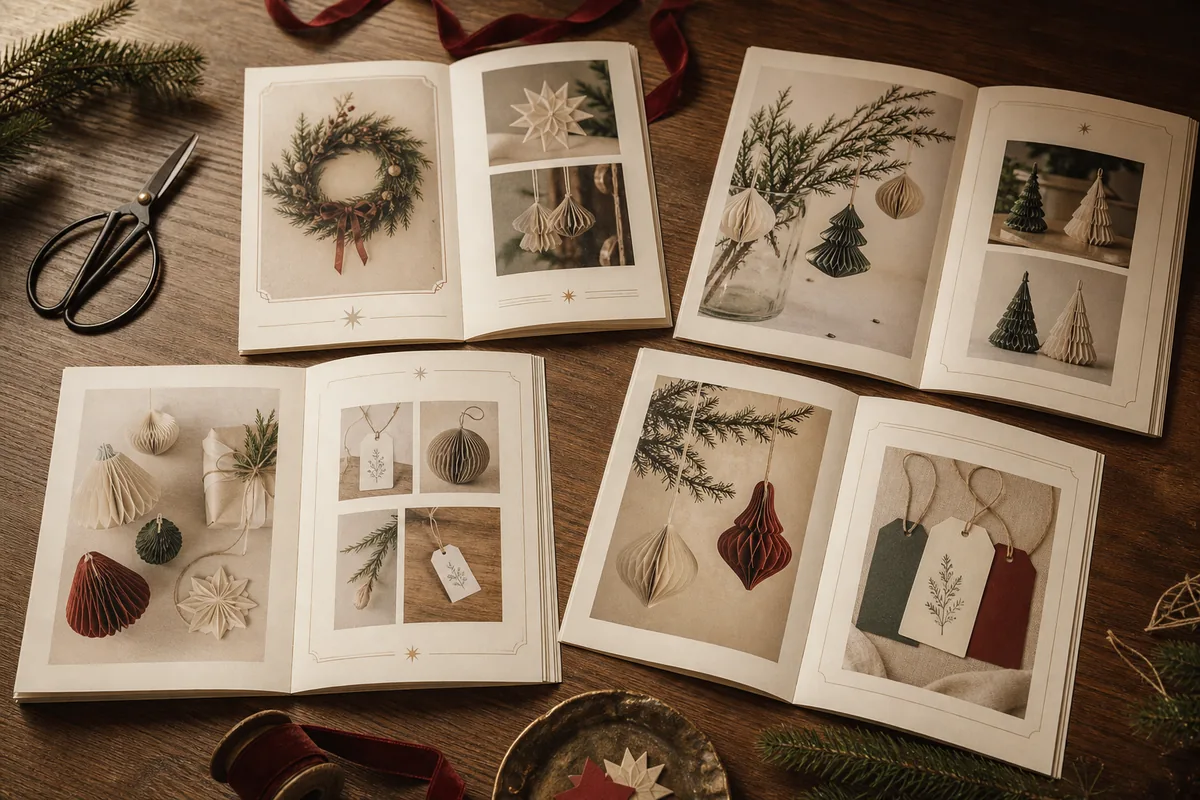
Choose one collection and customer occasion, photograph each product through five repeatable shot types, and edit the results into a concise 8–12-page lookbook.
A Holiday Lookbook for Handmade Craft Brands
A useful holiday lookbook is not a catalog padded with decorative photographs. It shows how a focused collection works together, gives buyers enough detail to judge materials and scale, and directs them to accurate product information. A small handmade brand can create an effective 8–12-page lookbook with one table, one window, a repeatable shot list, and disciplined styling.
Define one collection and one customer occasion
Choose 6–10 products that share a material, color story, technique, or use. “Hand-stitched ornaments for meaningful family gifts” is a workable direction; “everything available at Christmas” is not. Identify the occasion the images should solve: decorating a small tree, sending paper gifts, setting a holiday table, or choosing teacher presents.
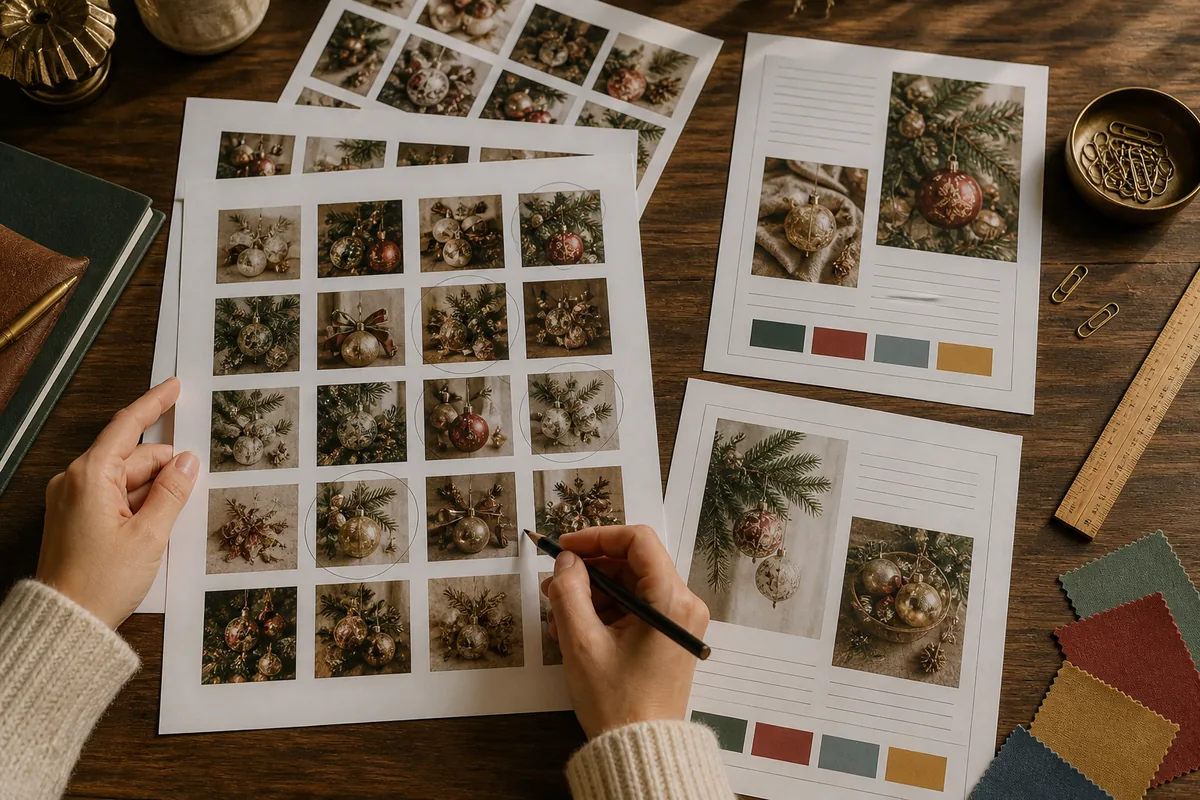
Write three visual rules before gathering props. For example: warm ivory background, evergreen and muted-red accents, and only natural wood or brass accessories. These rules prevent each page from becoming a separate mood board and keep inexpensive setups consistent.
Prepare products for accurate photography
Select finished inventory rather than samples that differ from what customers receive. Remove lint, loose threads, fingerprints, and temporary price stickers. Measure every product and verify colors, materials, care instructions, and included components against the sales listing.
Create a product log with item name, SKU, dimensions, color, photograph numbers, and any visible variation. Handmade differences are acceptable, but the lookbook should not show unavailable hardware, packaging, or personalization. If a prop is not included, identify it in the caption or keep the composition unmistakably contextual.
Build a repeatable tabletop set
Place a 30-by-40-inch sheet of matte warm-white paper or painted board beside a large window. Use a white foam board opposite the window to lift shadows. Turn off overhead lights, which often introduce mixed color and glare. A tripod keeps framing and scale consistent even when using a phone.
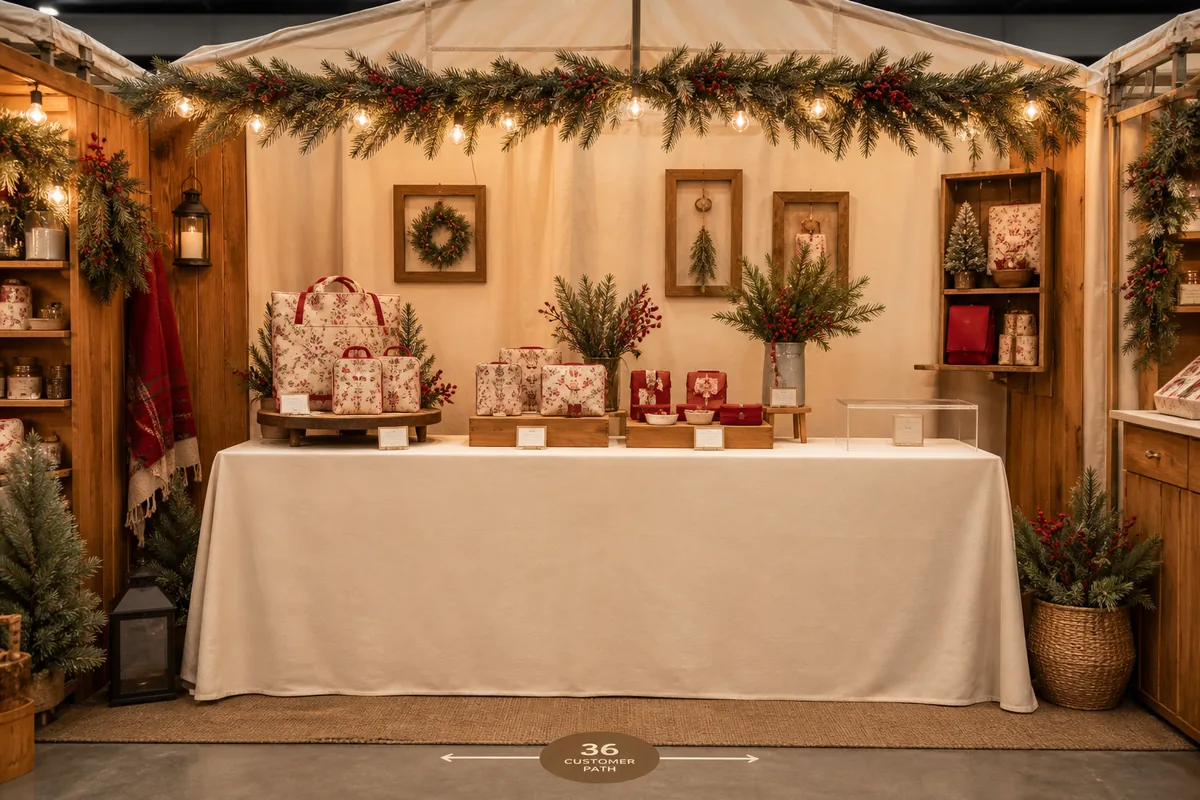
Add no more than three prop types: a short evergreen cutting, muted textile, and one wooden or brass object. Keep props behind or beside the product, never covering edges or important construction. Avoid artificial snow, glitter, food, open flame, and copyrighted artwork in the background.
Photograph a gray card or plain white card at the beginning of the session so color can be corrected consistently. Do not filter products so heavily that red, green, wood, or paper no longer resembles the item a buyer receives.
Follow five shot types for every product group
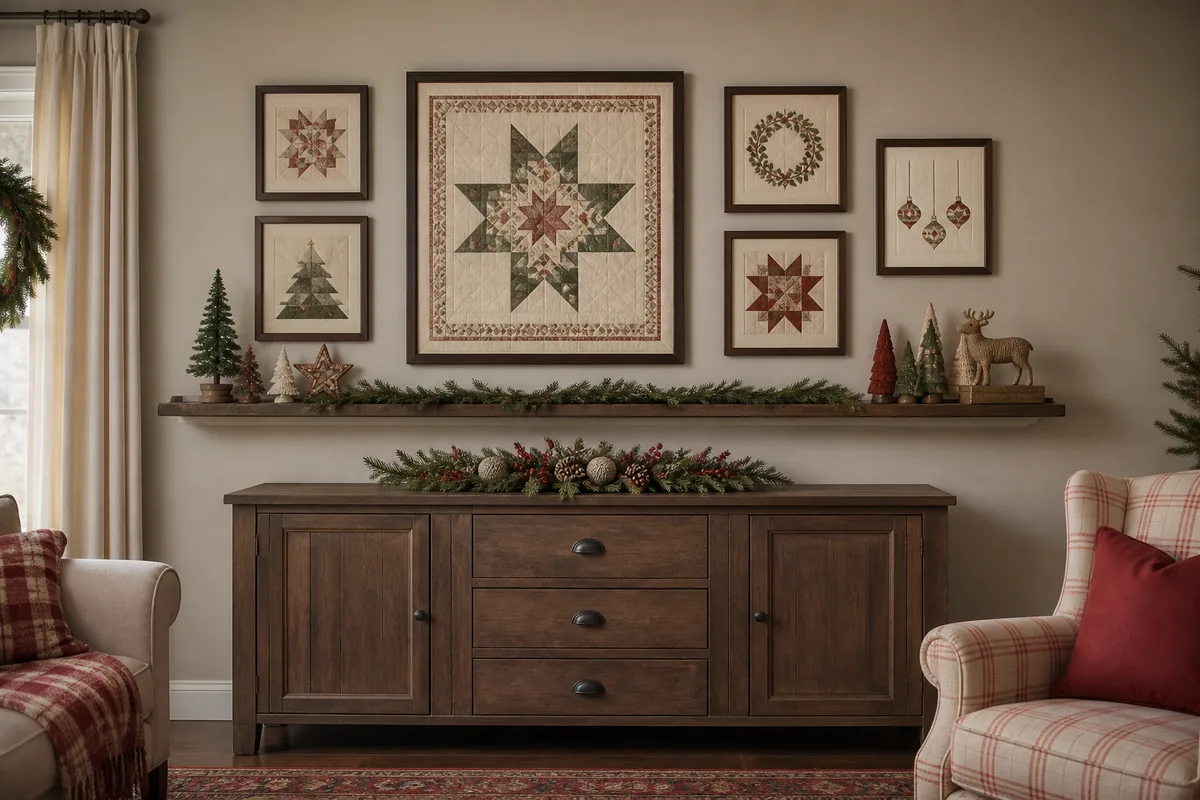
Begin with a horizontal collection cover showing the full group and deliberate negative space for a page title. Next, make one clean individual product image from a consistent angle. Add a close detail showing stitch, print, glaze, grain, or edge finish. Include one scale image with a hand, ruler, standard envelope, or familiar furniture element. Finish with one in-use scene tied to the chosen customer occasion.
Keep the camera position marked with tape and record the distance and height. For flat paper goods, shoot directly overhead. For dimensional work, a 30–45-degree angle usually shows both face and depth. Check every frame at full size for blur, dust, incorrect color, and distracting reflections before changing the set.
Edit the lookbook into a clear sequence
Use a simple order: cover, short collection statement, collection overview, two to four product spreads, material or process detail, gift or display scene, and final purchasing information. Alternate wider scenes with detail pages so the reader is not shown twelve identical grids.
Keep captions factual. Include product name, dimensions, primary materials, available colors, and a short use note. Do not invent scarcity, awards, sustainability claims, production capacity, or delivery dates. Link to current product pages rather than embedding prices that will quickly become outdated, unless the lookbook is for a fixed wholesale season.
Export for real readers
For a downloadable PDF, keep text selectable, provide meaningful image captions, check color contrast, and add alternative text when the publishing format supports it. Compress images enough for practical downloading while retaining detail; review the final file on both a phone and desktop.
Before release, ask someone unfamiliar with the collection to identify what is sold, what is included, how large it is, and where to buy it. If the images cannot answer those questions without explanation, reshoot rather than adding decorative copy. The strongest handmade holiday lookbook feels warm and editorial because its product story is coherent—not because every page contains more Christmas props.
Archive the final export together with the source photographs, product log, captions, font licenses, and release information for any identifiable person. Record the publication date and the product pages that were live at release. If an item is discontinued or materially changed, update or withdraw the lookbook rather than sending readers to inaccurate information. A dated archive also prevents next year’s campaign from accidentally reusing claims, colors, or packaging that no longer apply. Keep the final archive read-only and dated.