The most useful directions are skill-led rather than novelty-led: paper engineering, visible hand stitching, material reuse, modular decor, and documented small-batch collections.
Christmas Craft Trends for Young Creators
For a young maker, a useful trend should teach a transferable skill, fit a realistic budget, and produce something worth using. Here, “trend” means a HollyXmas editorial direction supported by documented craft signals—not a universal forecast. Etsy’s holiday reporting identified paper craft, artful mending, reuse, and handmade finishes, while the UK Crafts Council documented renewed attention to mending in 2025. HollyXmas adds modular construction and process documentation because they make seasonal work easier to repair, repeat, and evaluate.
1. Structured paper instead of flat cutouts
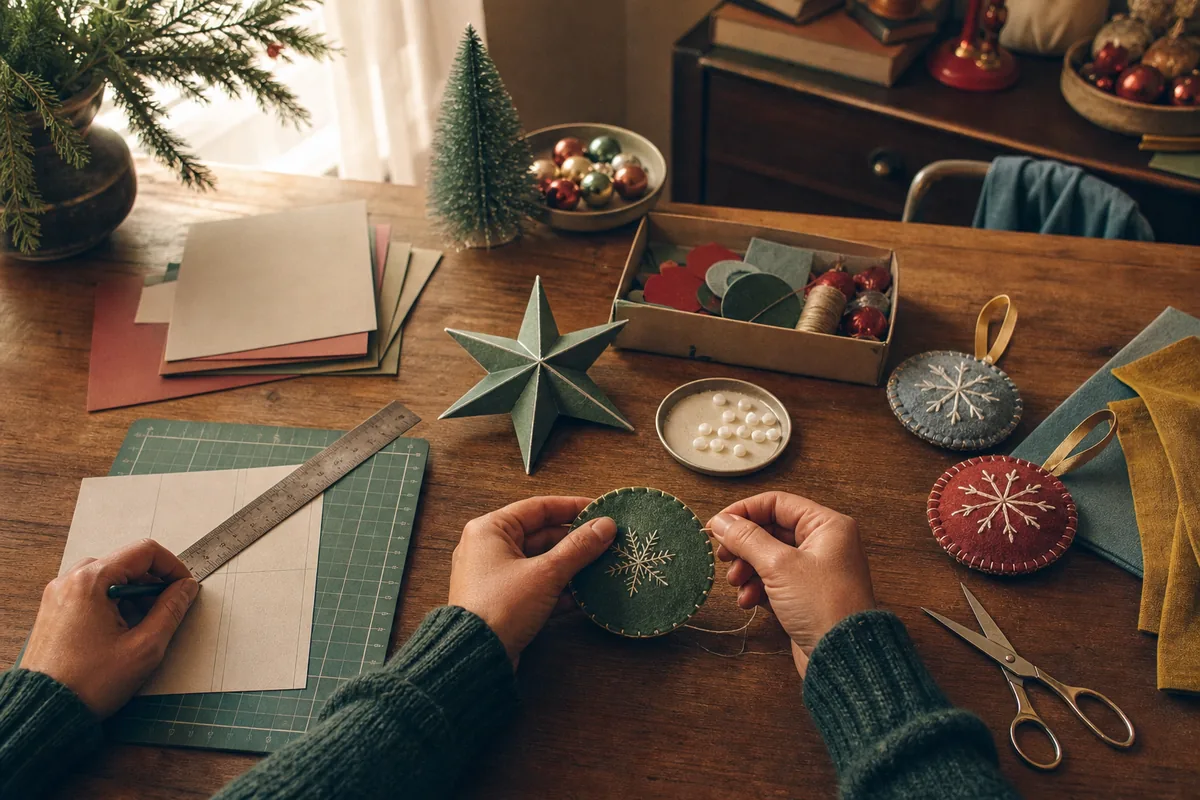
Paper engineering turns inexpensive cardstock into dimensional ornaments, lantern-like houses, folded stars, and honeycomb forms. It teaches scoring, measuring, symmetry, and patient assembly. Begin with 65- to 80-pound cover stock, a metal ruler, bone folder, cutting mat, craft knife, and PVA glue.
A manageable first project is a five-point folded star made from five 4-inch paper squares. Practice on printer paper before cutting decorative stock. Score every fold, dry-fit the points, and glue one seam at a time with clips. Plan 45 minutes for the first star and 20 minutes for later copies. Use battery lighting around paper structures; never place a bulb that becomes hot or an open flame inside them.
The trend stays personal through surface choice. Try old maps only when they are legally yours to cut, sheet-music reproductions in the public domain, children’s painted paper, or a restrained set of faded red, evergreen, and ivory stocks.
2. Visible hand stitching and repaired-textile character
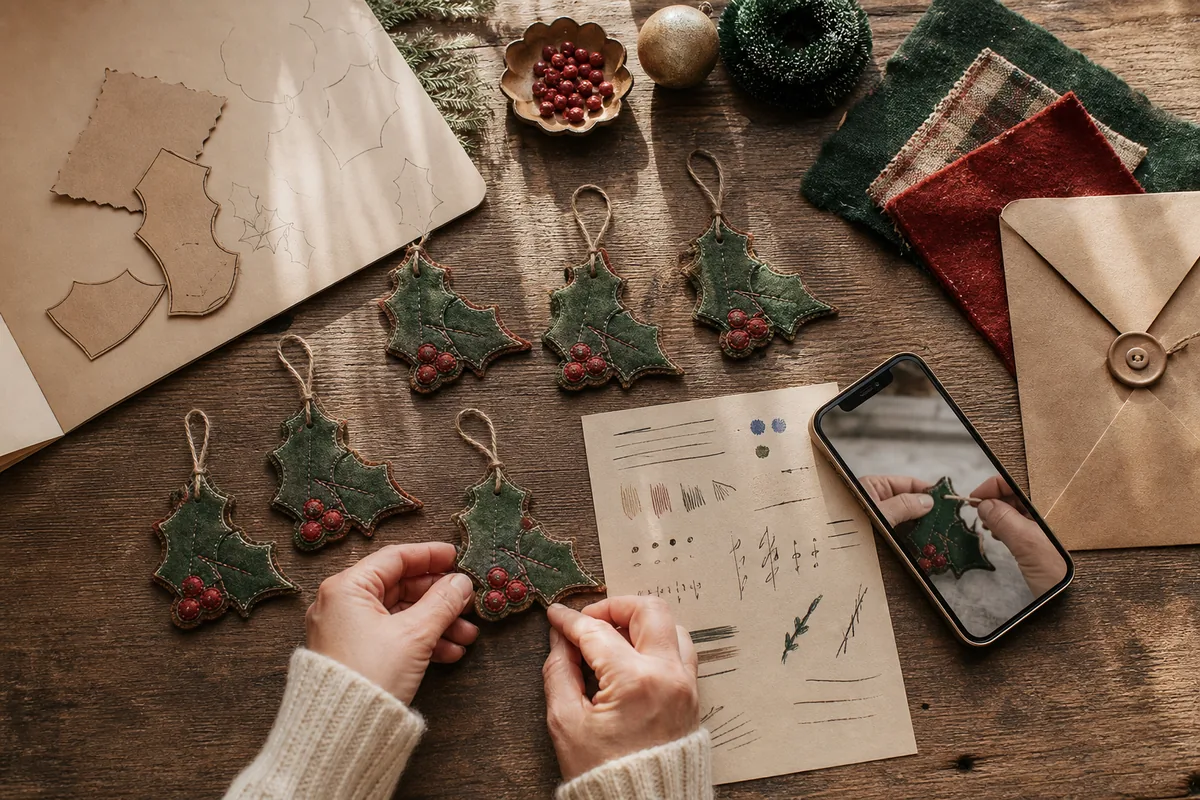
Perfectly hidden seams are no longer the only sign of care. Running stitches, blanket stitches, contrasting patches, and intentionally visible knots can make felt ornaments and fabric gift wraps feel direct and handmade. This direction is particularly good for beginners because the construction remains readable.
Use wool-blend felt or stable cotton that does not fray aggressively. Mark stitch intervals at 1/4 inch on a paper practice strip, then sew with pearl cotton or three strands of embroidery floss. A 4-inch mitten ornament needs two felt shapes, roughly 30 inches of thread, a small amount of filling, and an 8-inch hanging loop.
Visible does not mean insecure. Knot thread inside the ornament, reinforce the hanging point with three passes, and keep buttons or beads off items intended for children under three. A repaired scrap can carry a story, but stained, moldy, or structurally weak fabric should not be used.
3. Reclaimed materials with a clear origin
Reuse works best when the material is clean, identifiable, and suited to the job. Corrugated shipping boxes can become sturdy village bases; paper grocery bags make gift tags; fabric offcuts can become patchwork stockings. Avoid anonymous electrical parts, pressure-treated wood, food-soiled packaging, brittle plastic, and anything with unknown paint or chemical residue.
Sort materials by function rather than color. Keep rigid card for structure, flexible paper for wrapping, and attractive scraps for visible layers. Flatten and store paper under weight. Launder washable textiles before cutting. If a reclaimed material needs excessive adhesive or reinforcement, a small amount of new, durable material may create less waste than a failed project.
Record the source on a small tag—“made from last year’s gift wrap” is more meaningful than a vague sustainability claim. Do not describe a project as zero-waste when scraps, glue liners, or failed samples remain.
4. Modular decorations that change each year
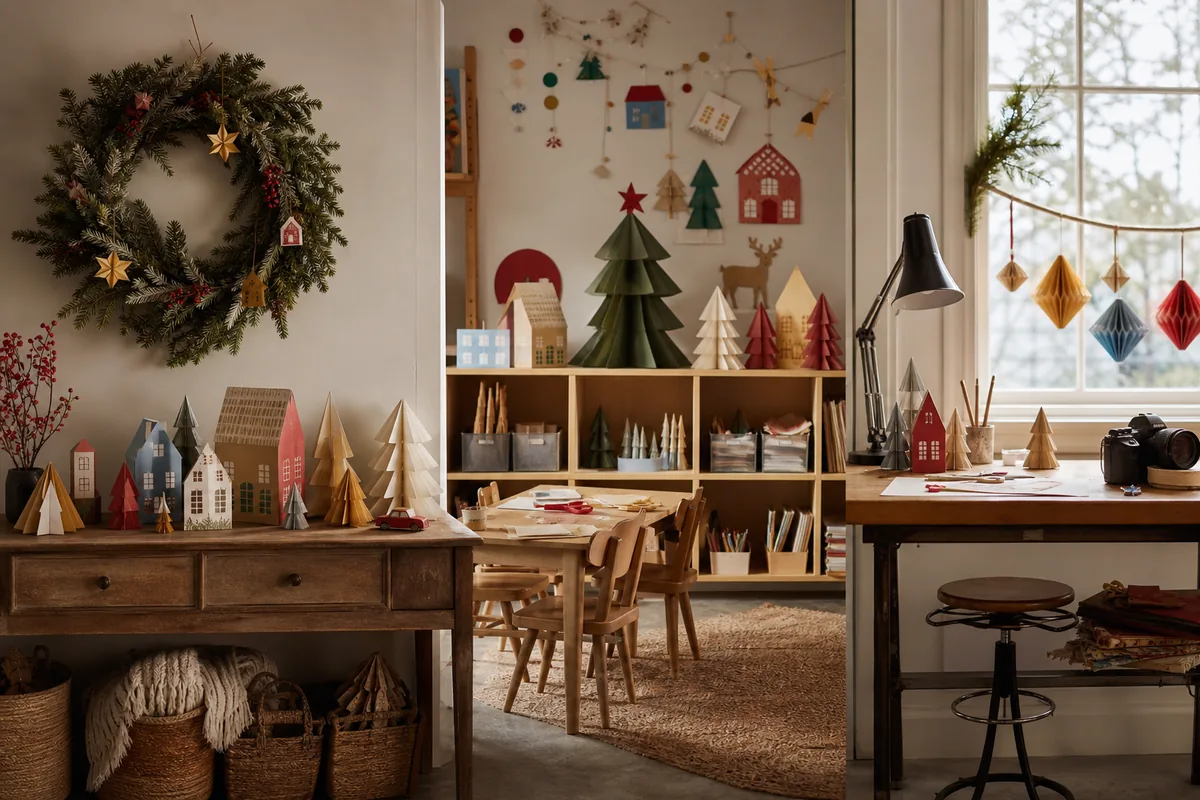
Modular projects use repeatable units that can be rearranged, repaired, or expanded. Examples include a garland of individual paper houses, a wall tree with removable felt ornaments, and a tabletop forest made from separate folded trees. A damaged component can be replaced without discarding the whole display.
Choose one connection method before designing the pieces. Punching two 1/8-inch holes in each paper unit allows it to slide onto twine. Sewn snaps can attach felt ornaments to a fabric banner. Small magnets are unsuitable around young children and can damage electronics or become a serious ingestion hazard; ties, tabs, and hook-and-loop dots are safer for shared settings.
Create a cardboard template and label it with dimensions and year. Make an odd number of units—five, seven, or nine—so the arrangement has a natural center. Store the pieces flat with tissue between painted surfaces.
5. Small-batch collections with a documented process
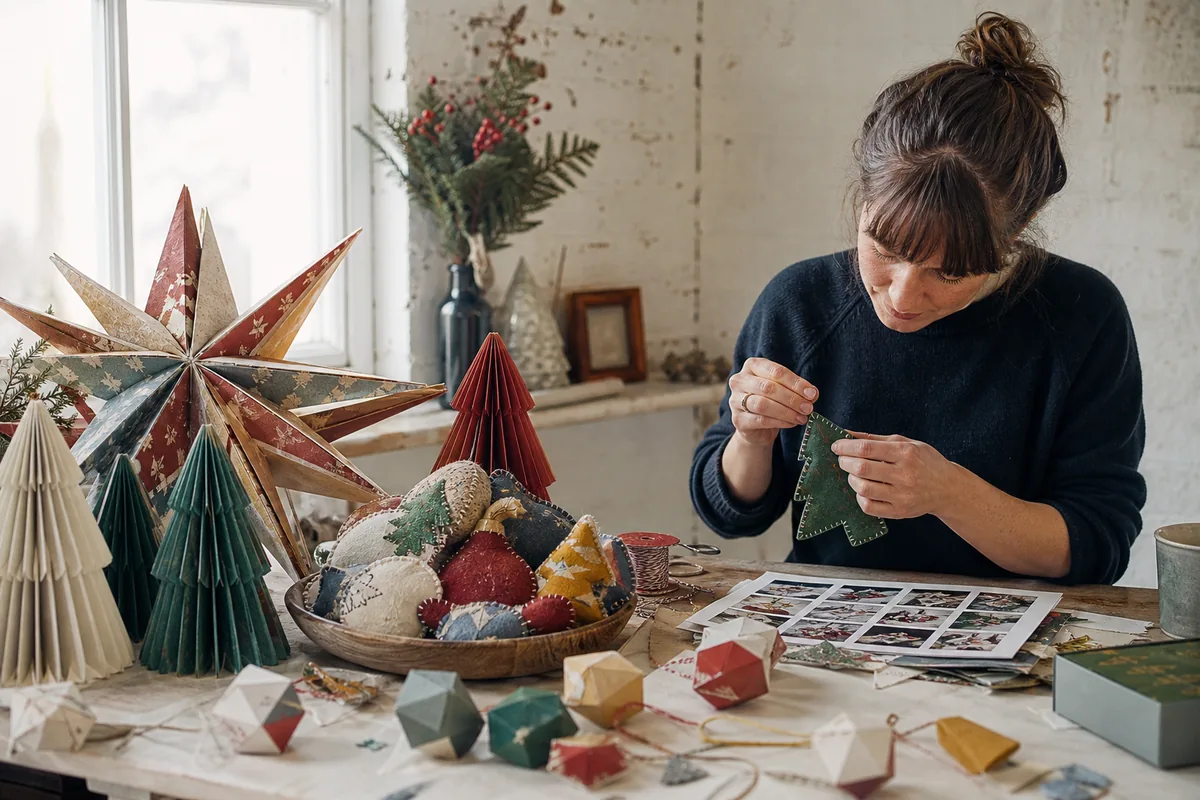
Young creators interested in a portfolio or first market table learn more from six related pieces than from six unrelated crafts. Choose one format, such as a 3- to 4-inch ornament, and vary only color, motif, or stitch. Set a material budget before starting and time the first three pieces separately. The average, not the fastest attempt, is the useful production estimate.
Photograph the template, one construction step, the finished group, and a scale reference. Keep notes on material names, suppliers, quantities, safety warnings, and changes. If selling, an adult should review local market rules, taxes, labeling, intellectual-property rights, and product risks. Never copy a character, logo, pattern, or another maker’s distinctive design merely because it appears online.
Choose a direction with a three-question test
Ask: What skill will improve? Where will the finished object be used? Can the material and method be repeated safely? A trend that answers all three deserves a sample. If it depends on costly equipment, a viral visual effect, or supplies that will have no later use, save the image as inspiration and choose a smaller experiment.
One strong seasonal plan might pair a structured paper star, two visibly stitched felt ornaments, and a seven-unit reclaimed-card garland. The projects look related through color, but each develops a different skill. That balance gives a young creator more than temporary holiday content: it creates evidence of measuring, construction, material judgment, finishing, and visual editing that can support the next project too.
Sources and scope
- Crafts Council: Altered states—craft and the mending movement (2025)
- Etsy Seller Handbook: Marketplace Insights—2020 Holiday Trends
These sources establish relevant making signals, not a universal popularity ranking. The five project directions and safety recommendations are HollyXmas editorial selections.